
All topic course
Class on Polarization and Possibility of Flexible Thinking
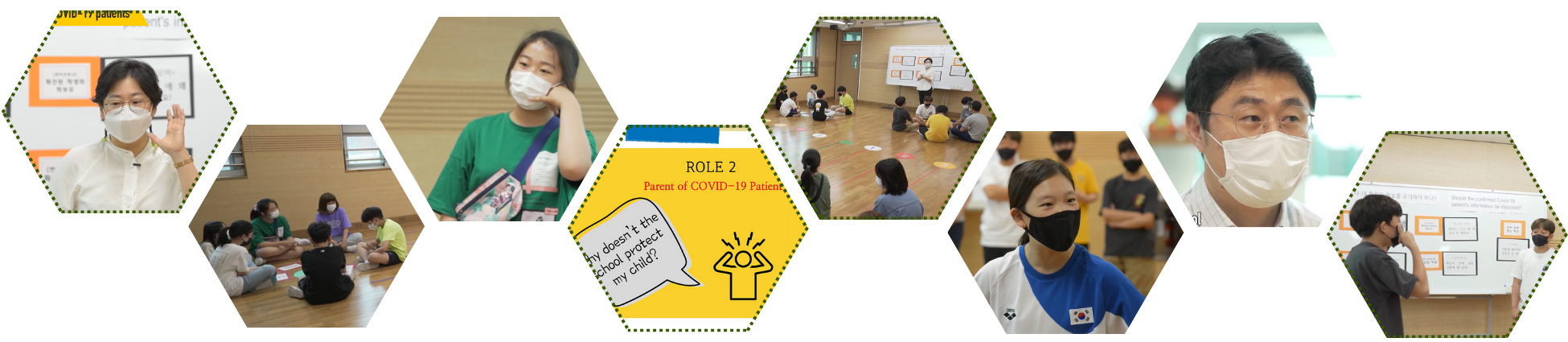
Mr HA Seung-chun, an elementary school teacher, focused on the issue of polarization among students. Observing that students often present extreme views on certain issues, he realized that the provision of opportunities for students to look at the issues from different points of view is critical. He designed a class on the possibility of flexible thinking using various pedagogical tools, including role-playing. The class is composed of a pre-activity lesson, a main activity, and a reflection session.
On Rights of All Children
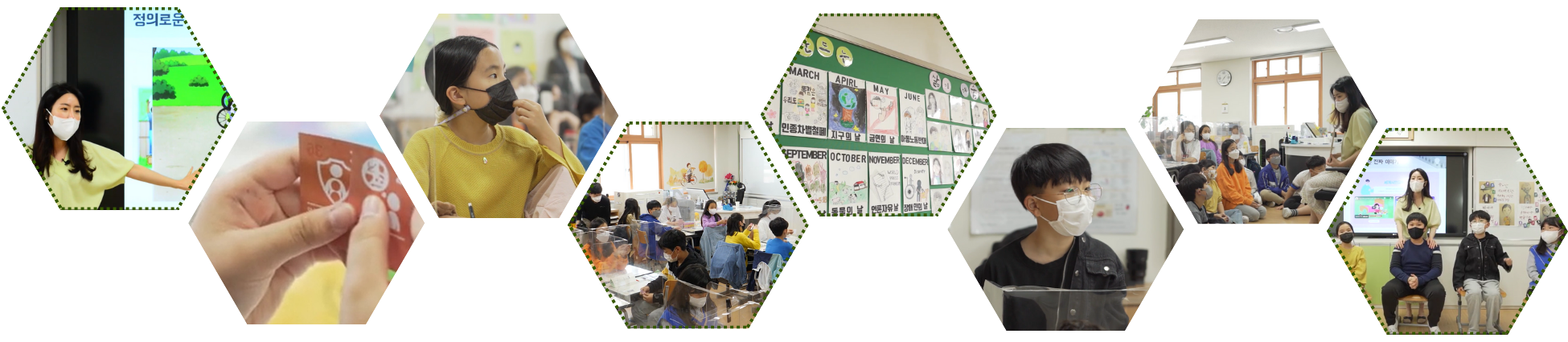
Ms. KIM Hwa-Seon, an elementary school teacher, teaches children's rights to her 5th-grade students in the social studies class. With the lesson title, 'Respect for Human Rights and a Just Society', the class involves methods, including storytelling and group discussion. Using the social studies textbook, along with the UN Convention on the Rights of the Child Poster & Card, and children's storybook 'The Stories Shouldn't be True', the class invites students to learn about their rights and social justice. Furthermore, they learn about the realities of children in different corners of the world and think about human rights violations and social injustice, which is followed by the discussion on the solidarity and actions required as global citizens to build a more just and peaceful society for all.
Understanding Inequality through Participatory Activities & Discussions
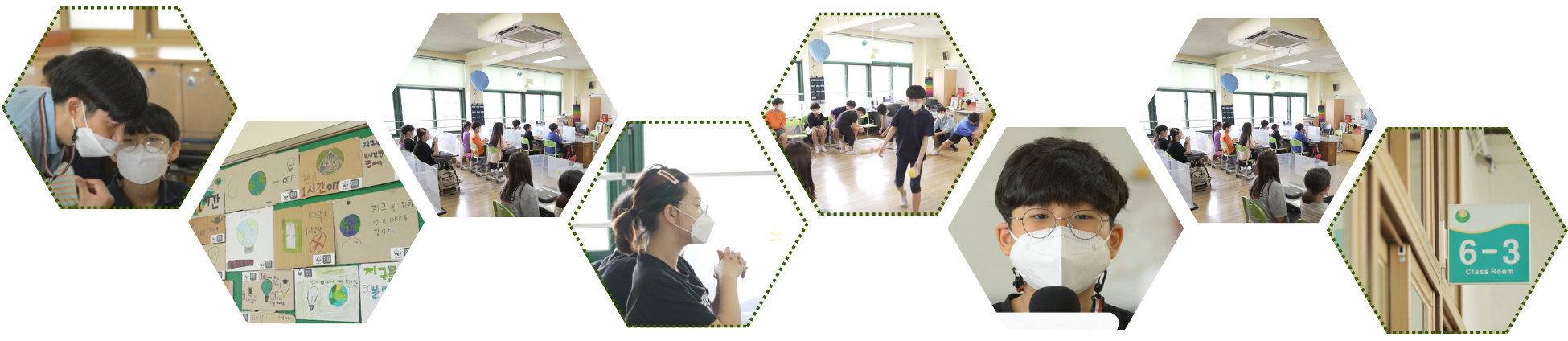
Mr. PARK Jae-joon, an elementary school teacher, deals with the issue of inequality in his class with the 6th-grade students. Through the participatory activities and discussions, the students actively get engaged in the learning process with the topic of equality and justice. Starting with the situation using the scenario of the TV Show 'Law of Survival', students take part in the games of inequality, 'Apple Game'. After the games and role-playing, students are guided to apply their experience to the realities of society with a focus on the lives of minorities. In the follow-up activities, students have discussions on what kind of policies or systems are required to make society more equitable and just for all.
GCED Practice using Place-based Learning (PBL)
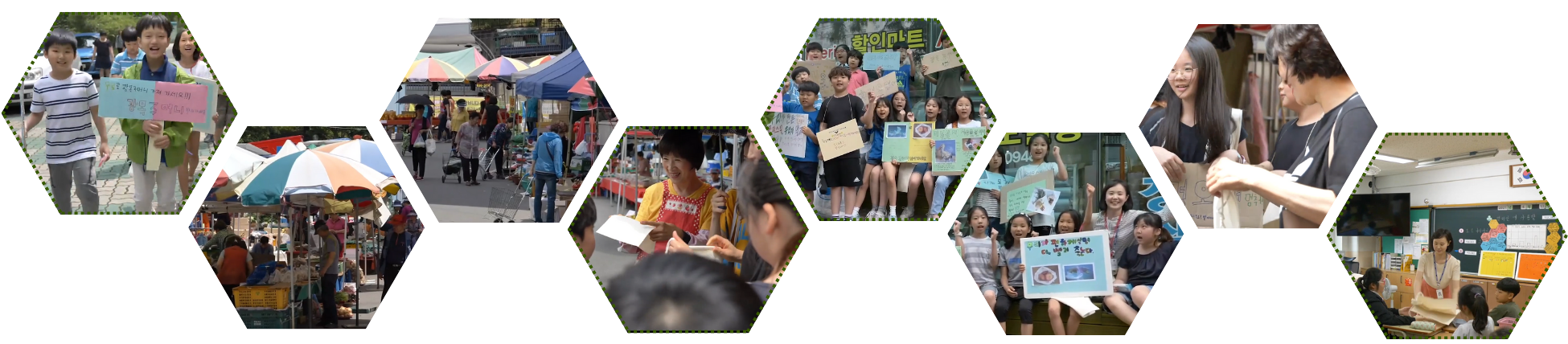
PBL (Place-based learning) and GCED have many common areas as both promote the learner-centered, participatory, inquiry-based, and values formation of learners. Ms. KIM Bo-Eun, an elementary school teacher, applies the PBL methodology for her GCED class. With the recognition of the community's major issue, plastic waste, Ms. KIM, and her class began a GCED project 'Blackhole project'. As active members of society, the students research the plastic waste issue in their community and advocate for the reduction of plastic use by designing and carrying out community campaigns at markets and neighborhoods.
GCED Class on Human Rights
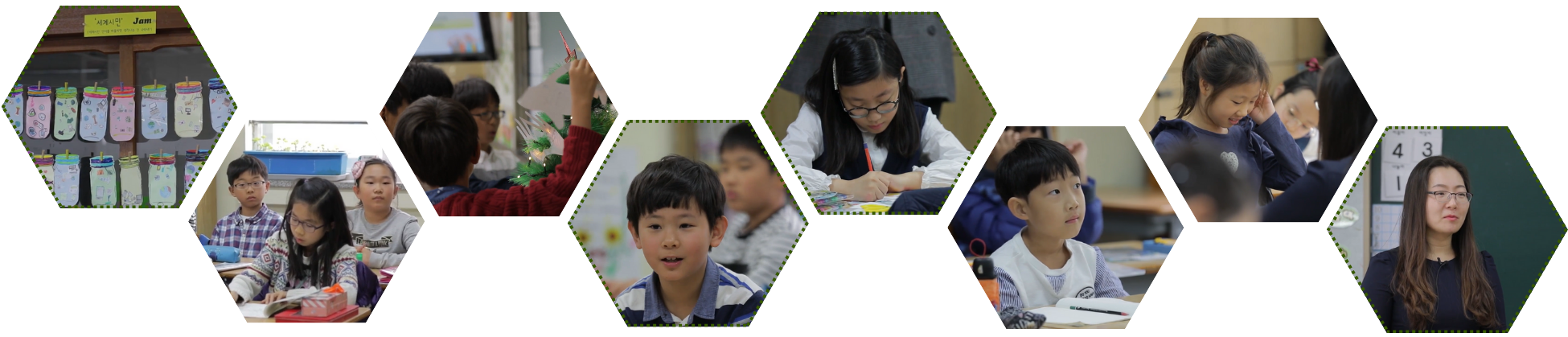
Ms. LEE Won Hyang, an elementary school teacher, teaches the values of human rights to her students. The class is organized by the lesson on the concept of human rights, case sharing of human rights violations, and activities on problems occurring from the human rights violation cases. Using child-friendly activities, such as crafts, the teacher tries to deliver the complicated meaning of human rights to young students while inviting them to discover the values inherited in the term by connecting the concept with the children's real-life issues.
